Integration
Get your systems talking to each other.
The ERP says one thing, the store shows another. If someone closes that gap by hand each morning, your integration isn’t finished.
Good integration goes unnoticed. A sold item leaves stock, the tracking number reaches the customer, the invoice lands in accounting. Nobody has to call anybody.
What do we connect?
- 01
ERP
We have field experience with Logo Tiger, Nebim and Mikro. Other systems with API documentation get a technical review first.
- 02
Stock and pricing
Stock by warehouse, store and channel, plus price lists, all from a single source.
- 03
Orders and returns
Orders land in the ERP and status returns to Shopify. Returns and cancellations update accounting at the same time.
- 04
Shipping and 3PL
Labels, tracking numbers and warehouse work plug into the order flow.
- 05
Marketplaces
Marketplace orders and stock run in the same flow as your store, without clashing.
- 06
Accounting and e-documents
Data for invoices, returns and commission reconciliation reaches the right system without manual entry.
Our own panel
GI Connect
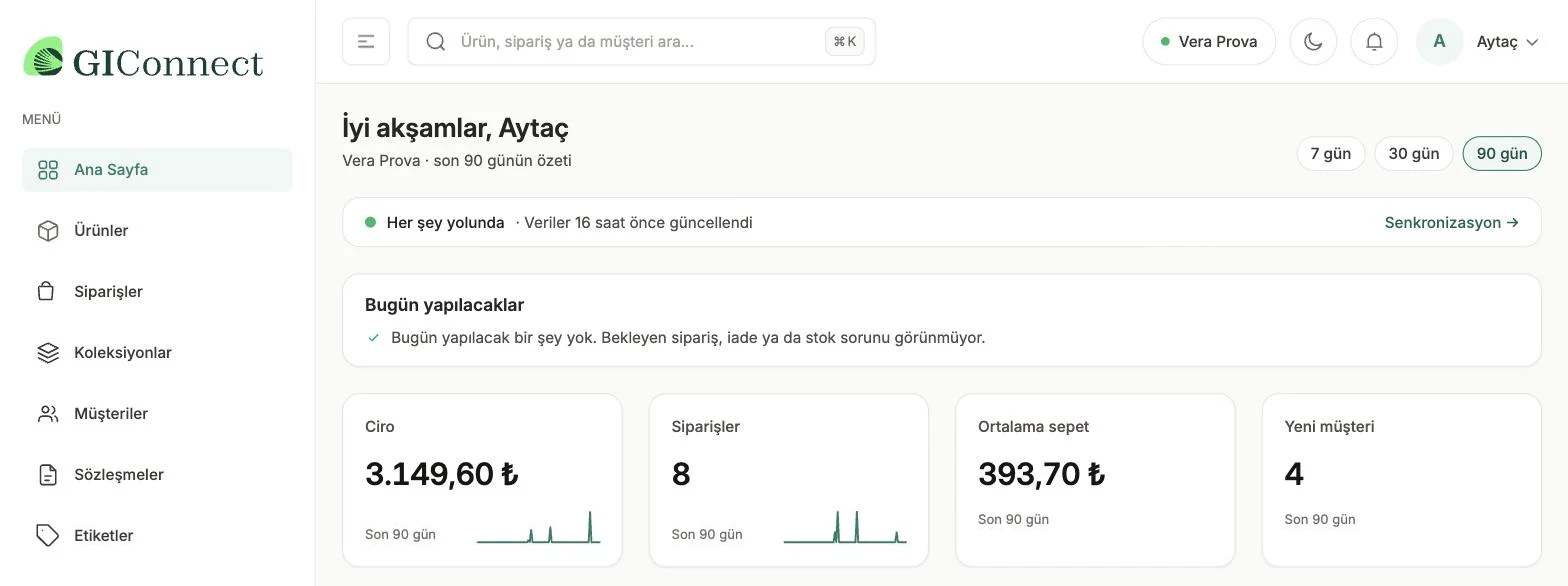
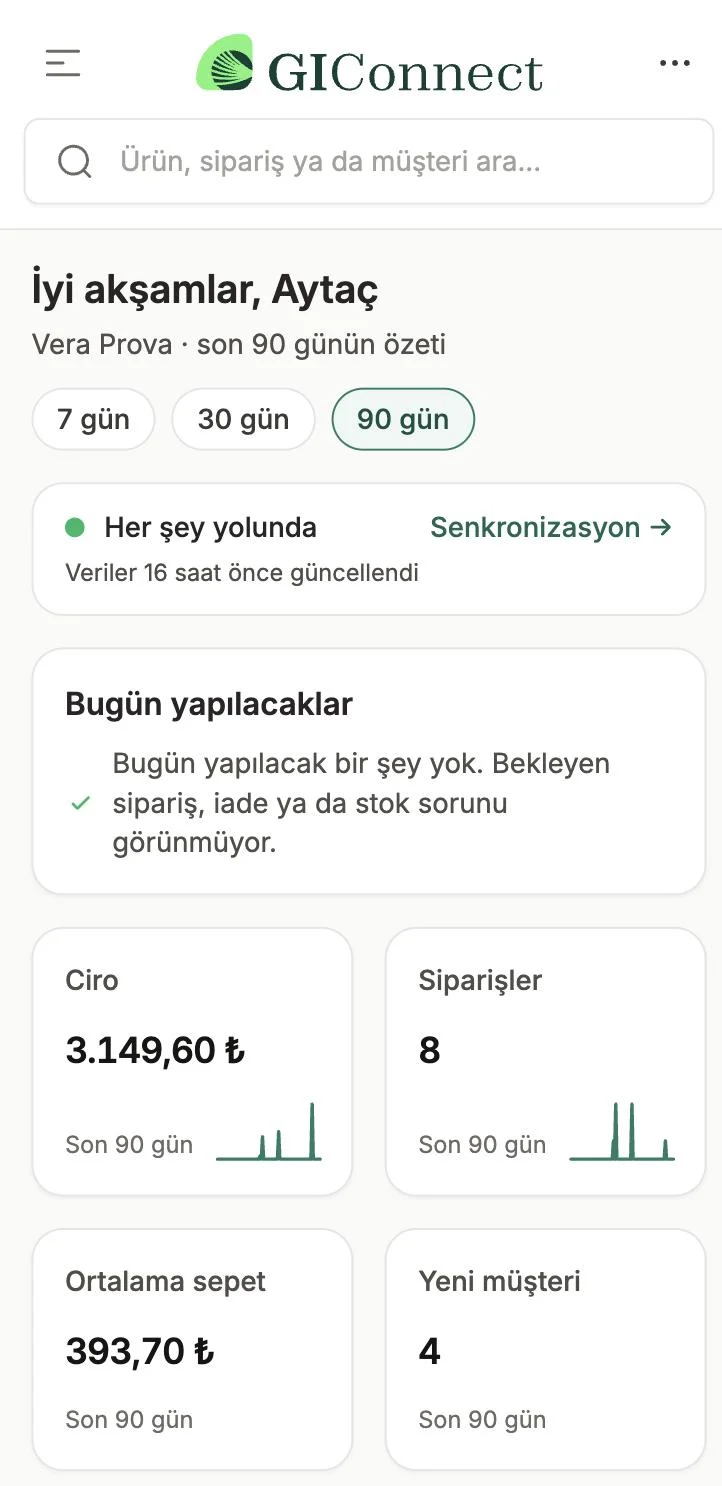
The panel we built so you can run your Shopify stores and accounting software from one place. You see products, stock, orders and customers here, and make your changes here. It looks different from Shopify, but works with it end to end.
- Several stores managed in one place
- Two-way data flow with your accounting and stock software
- Permissions by team member
- A record of every change
Four rules of a solid integration
- 01
One source of truth
For each type of data we decide up front which system is the master. Stock from the ERP, orders from Shopify, for example.
- 02
Queues and retries
If a system goes down for a while, nothing is lost. Records wait in line and retry on their own.
- 03
Traceability
You can see where every record came from, where it went and when it was processed.
- 04
Early warning
When a flow stops, your team hears first, not your customer.
What we work with
- Logo
- Nebim
- Mikro
- REST API
- GraphQL
- Webhooks
- SOAP
- SFTP and file transfer
- Bulk Operations
- 3PL
Questions
Which ERP systems do you work with?
We have integration experience with Logo Tiger, Nebim and Mikro. For other systems with API documentation, we do a technical review first and then give you a straight answer.
Will the store go down during integration?
No. We build the flows in a test environment first, then bring them live in stages.
Why custom when connectors exist?
If your needs are standard, a connector may be enough, and we’ll say so. Custom development pays off once special rules, high volume or several systems come into play.
How often does the data update?
Critical data such as orders flows the moment it happens. For stock and prices we use the shortest interval your ERP supports, so the ERP sets the limit.
Who’s moving what by hand right now?
The answer is the first line of your integration plan.
Book a technical call